
Doc Productions
Production 1
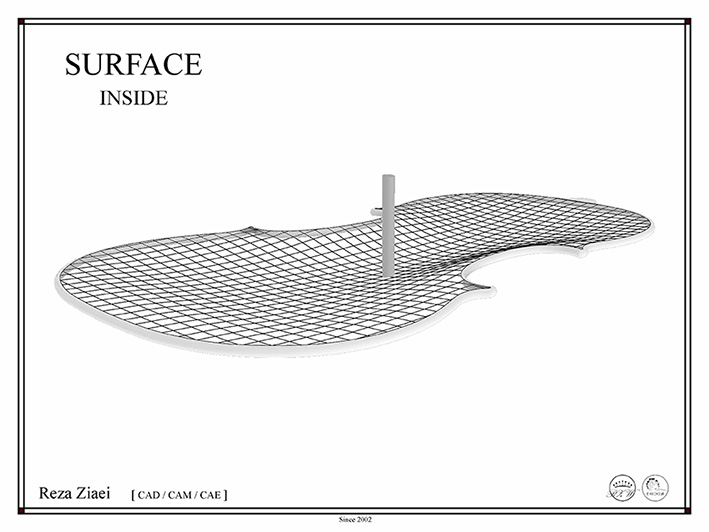
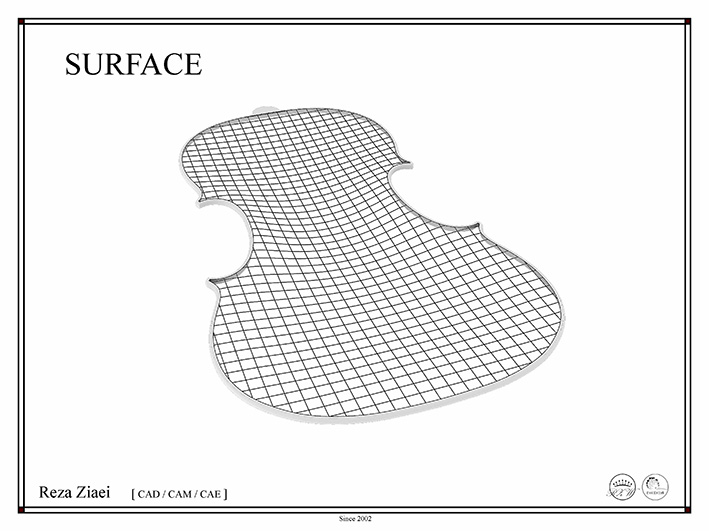
Foundations of the Violin Surface
Violin Bridge Deformation Research Project
This research was founded on an idea that took shape under the guidance of Master Luthier Reza Ziaei and was subsequently developed through his scientific guidance and support.
The initial concept of this research was introduced in 2016, and its collaborative implementation began in 2021. Part of its results was presented to the public for the first time in 2024. Since 2025, this project has been continuously reviewed, developed, and refined, and it is still expanding.
This collection is dedicated to the study and visual presentation of the normal condition and various deformation patterns of the violin bridge. It represents an effort to provide a clearer understanding of how the violin bridge deforms and of the structural phenomena associated with it.
All images and materials presented in this collection are the result of the intellectual and research activities of its creators (Master Luthier Reza Ziaei and Soudeh Mofidi), and all rights are reserved.
Any use, reproduction, redistribution, translation, adaptation, citation, or commercial and non-commercial exploitation of this work is permitted only with proper attribution, citation of the original source, and prior permission from its creators.
The content presented on this page forms part of an ongoing research project, a more comprehensive version of which is currently being prepared and developed for publication as a book.
.jpg)
.jpg)
Production 2
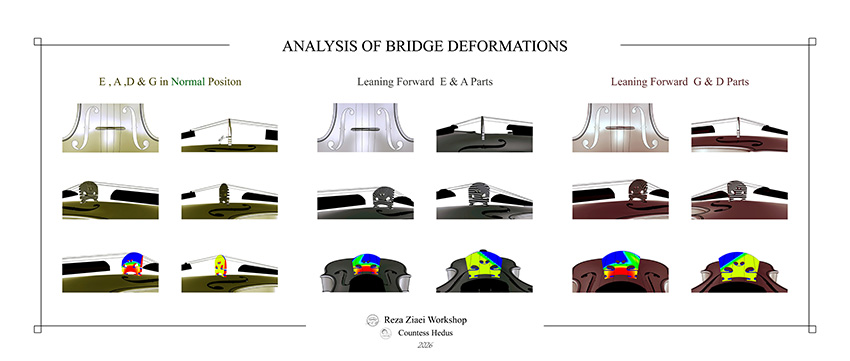
The Figure is part of the “Bridge Flexure” series, created to enhance makers’ and musicians’ understanding of the structural and acoustic behavior of the violin bridge. In this section, the bridge in its standard condition is examined using analytical tools and methods to provide a basis for comparison with other deformed states.
.jpg)
Production 3
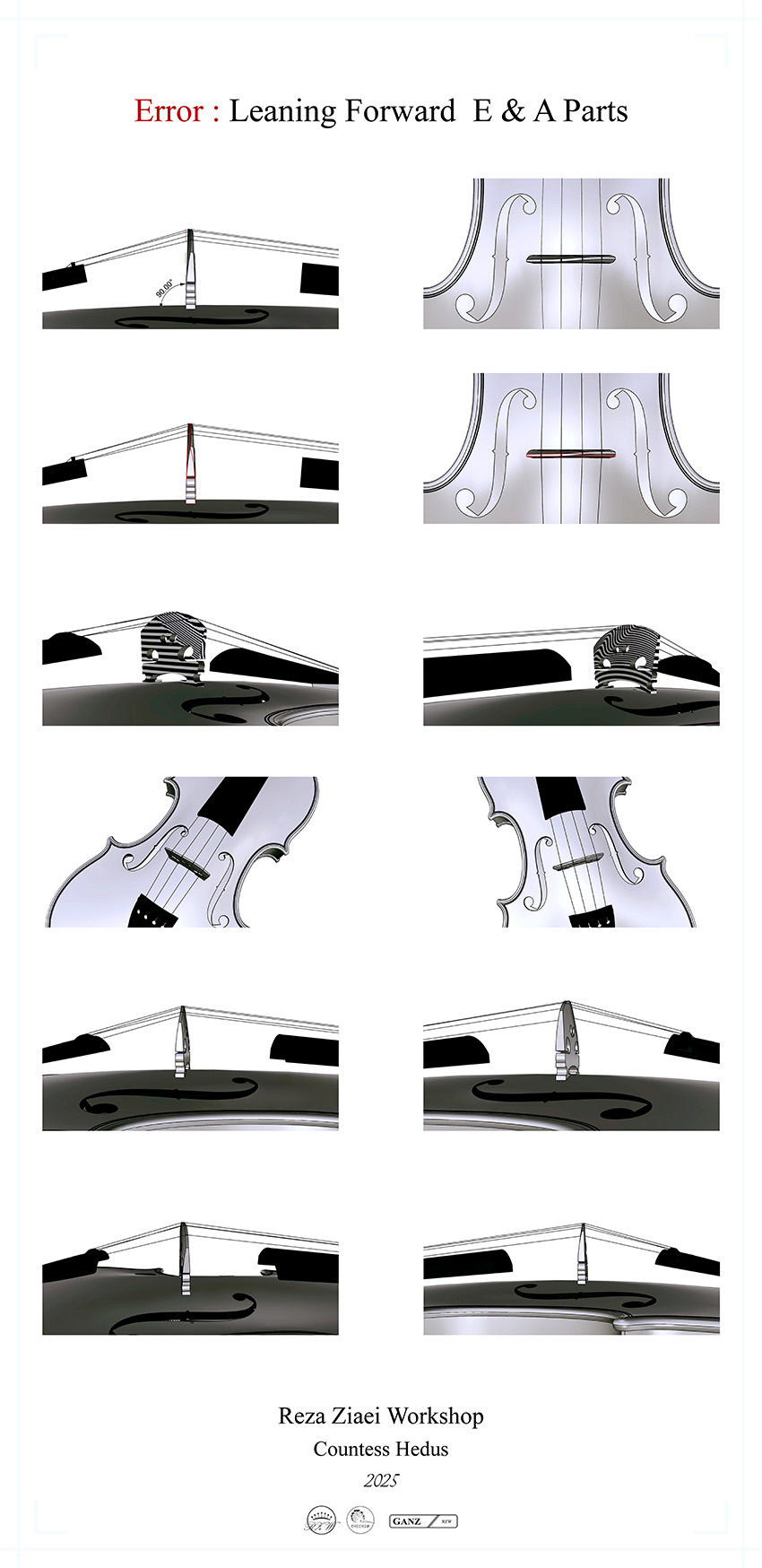
Leaning Forward E & A Parts
The figure shows the localized displacement of the E and A string regions on the upper area of the
violin bridge, which
is due to the effect resulting from the tension of the corresponding strings.
.jpg)
.jpg)
Production 4
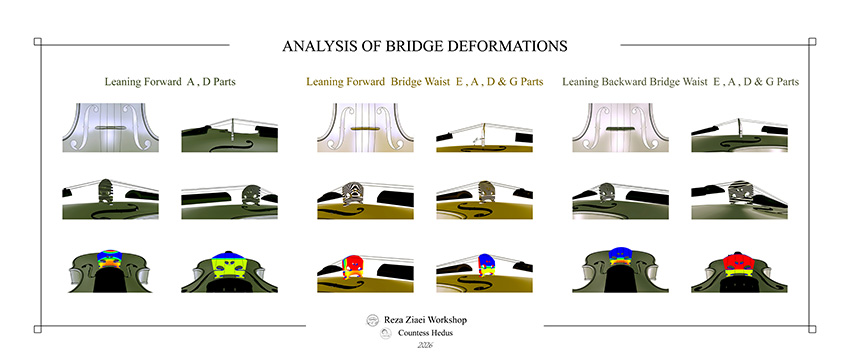
Lining Forward A & D Part
The figure shows the localized displacement of the A and D string regions on the upper area of the violin bridge, which
is due to the effect resulting from the tension of the corresponding strings.
.jpg)
Production 5
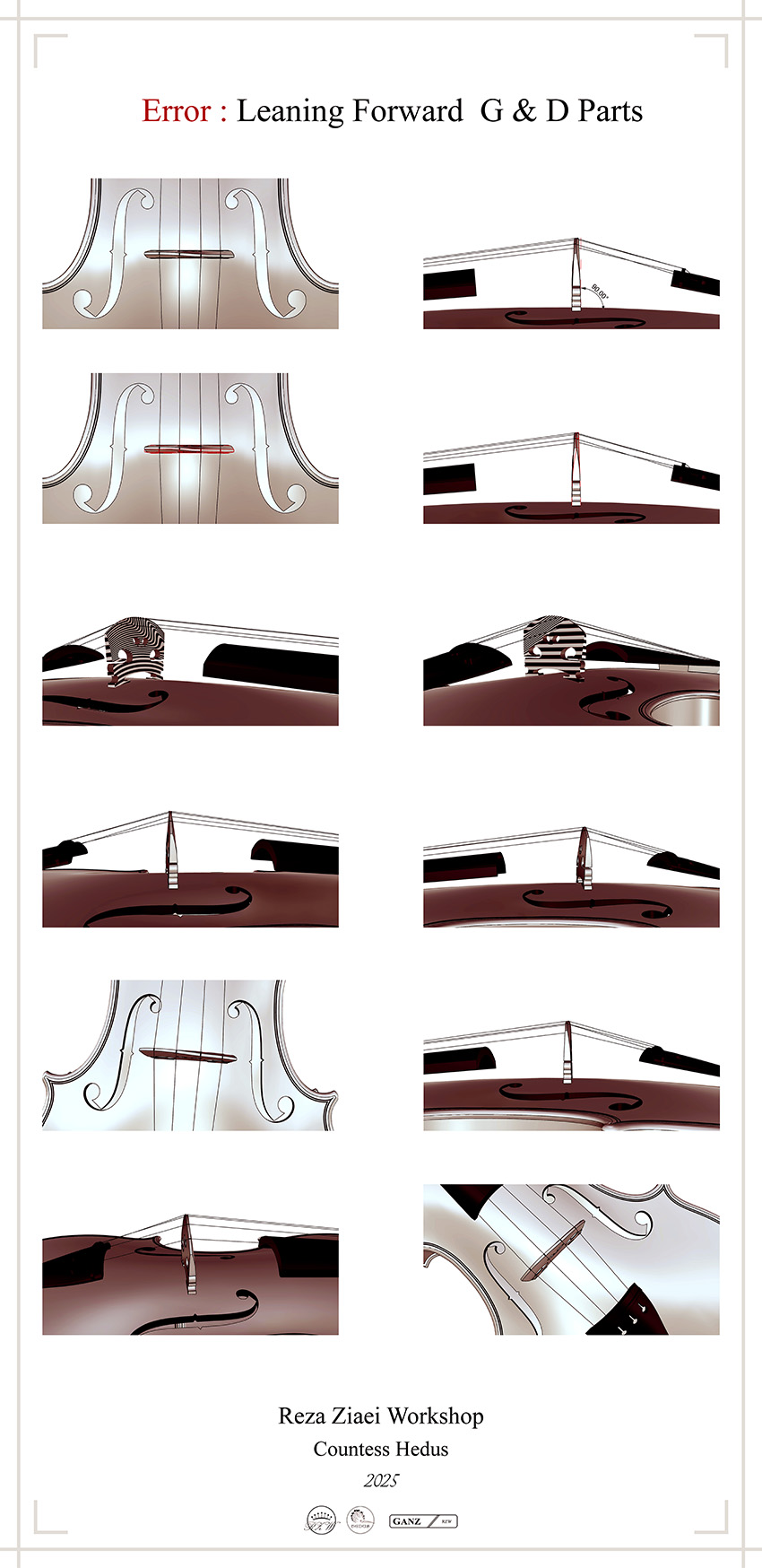
Leaning Forward G & D Parts
The figure shows the localized displacement of the G and D string regions on the upper area of the violin bridge, which
is due to the effect resulting from the tension of the corresponding strings.
.jpg)
Production 6
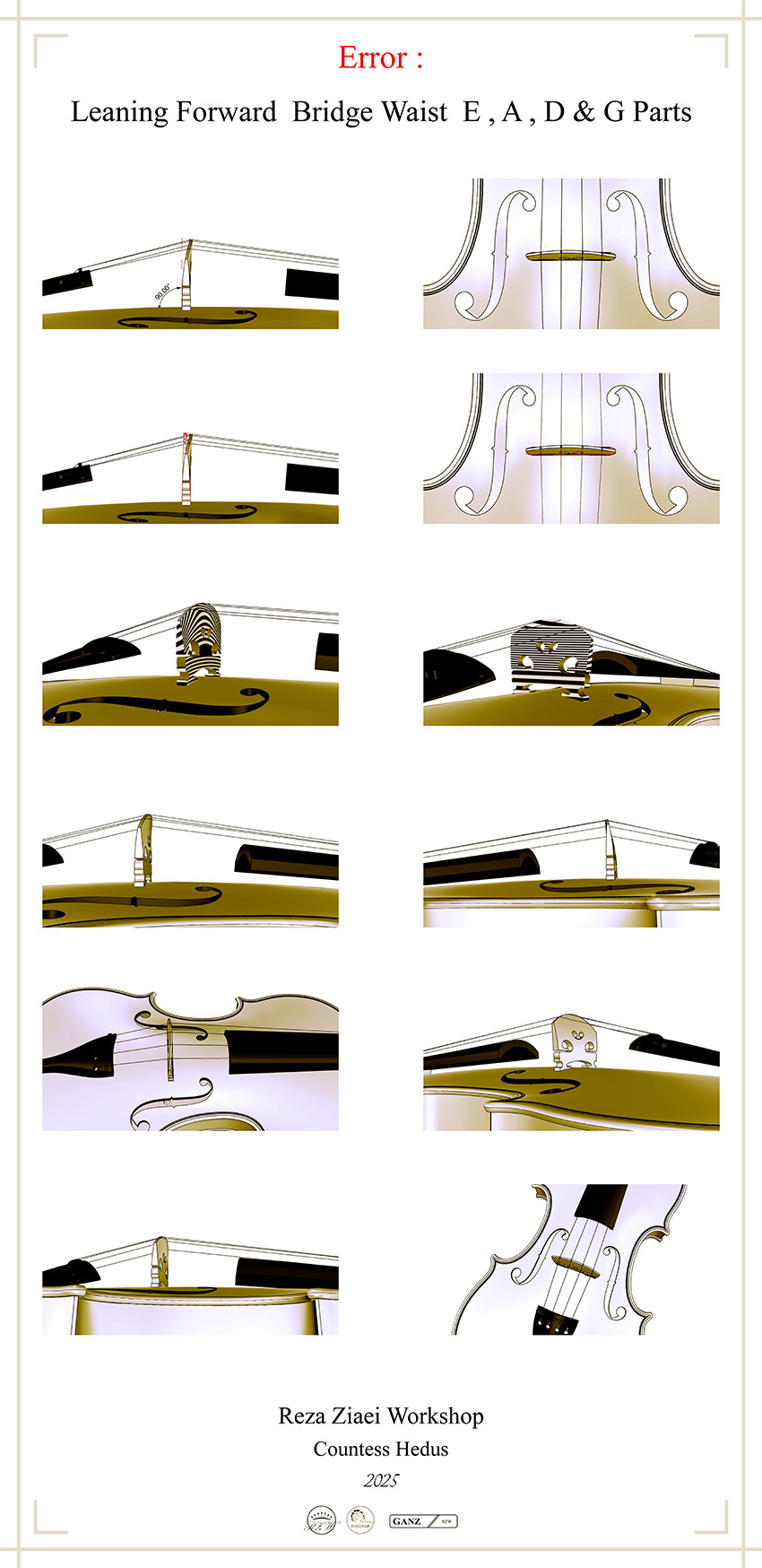
Leaning Forward Bridge Waist E , A , D & G Parts
The figure shows the localized displacement of the E, A, D, and G string regions on the upper area of the violin
bridge, which is due to the effect resulting from the tension of the corresponding strings.
.jpg)
Production 7
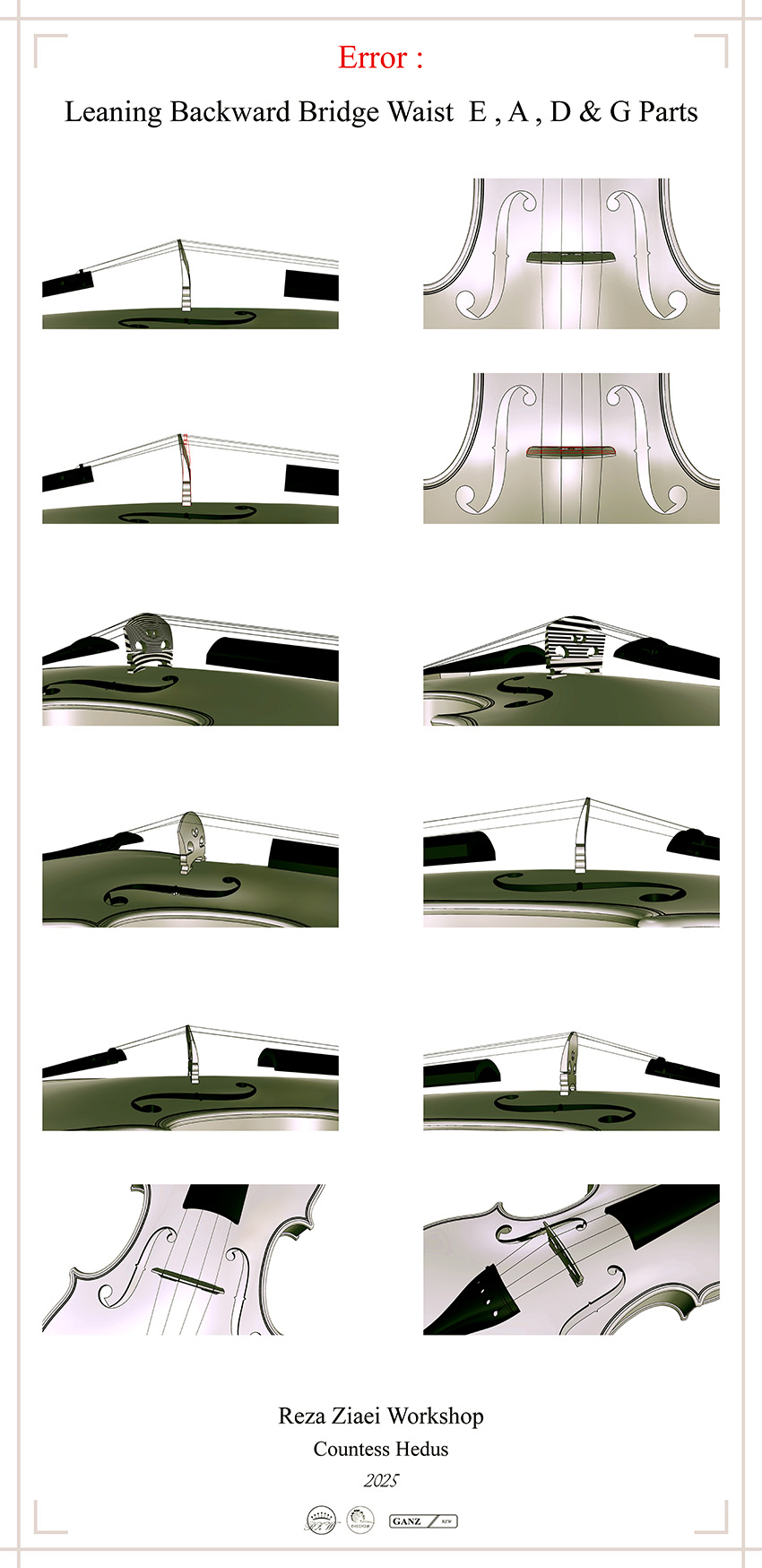
Leaning Backward Bridge Waist E , A , D & G Parts
The figure shows the localized displacement of the E, A, D, and G string regions on the upper area of
the violin
bridge, which is due to the effect resulting from the tension of the corresponding strings.

.jpg)
Production 8
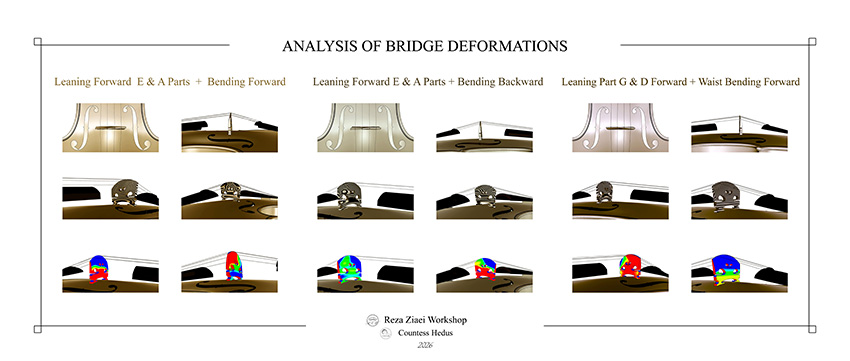
Leaning Forward E & A Parts + Bending Forward
The adjacent figure illustrates the localized displacement of the E and A string region on the upper area of the violin
bridge, along with its forward bending. This deformation occurs as a result of the tensile forces exerted by the
respective strings.
.jpg)
Production 9
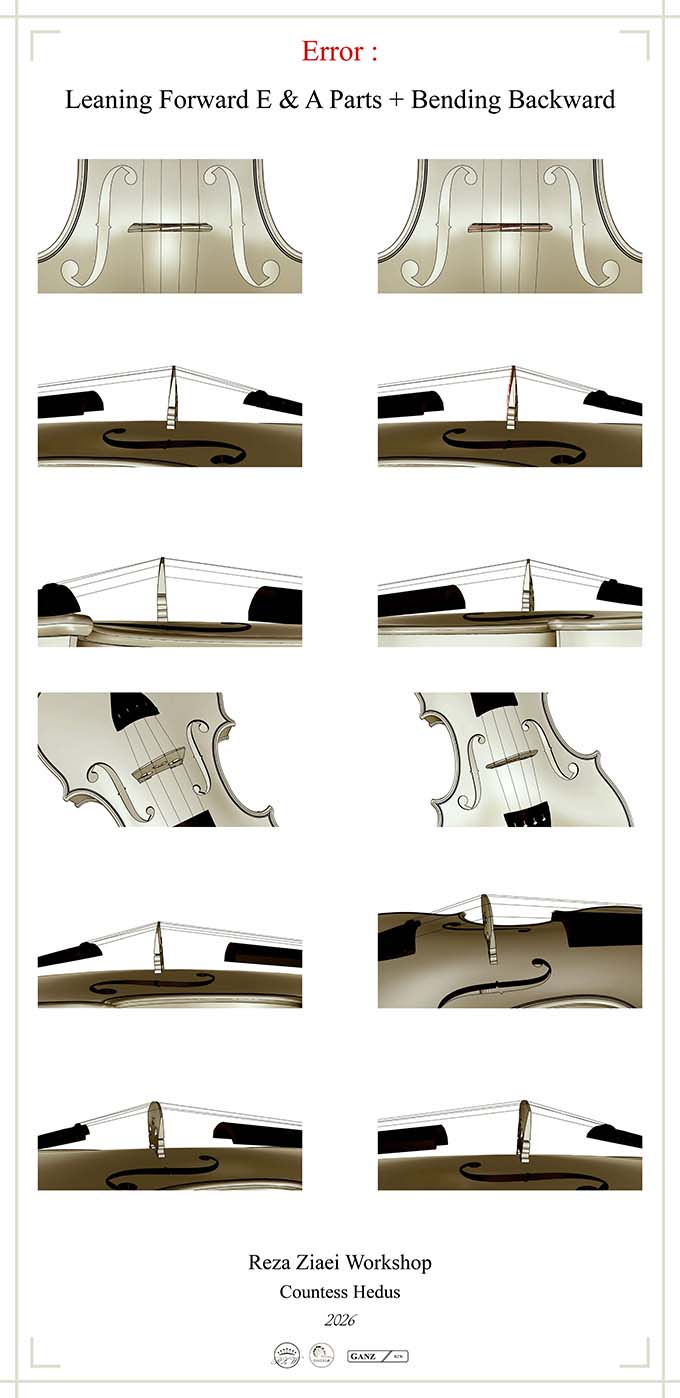
Leaning Forward E , A Parts + Bending Backward
The adjacent figure illustrates the localized displacement of the E and A string region on the upper
area of the violin
bridge, along with its Backwar bending. This deformation occurs as a result of the tensile forces
exerted by the
respective strings.
.jpg)
Production 10
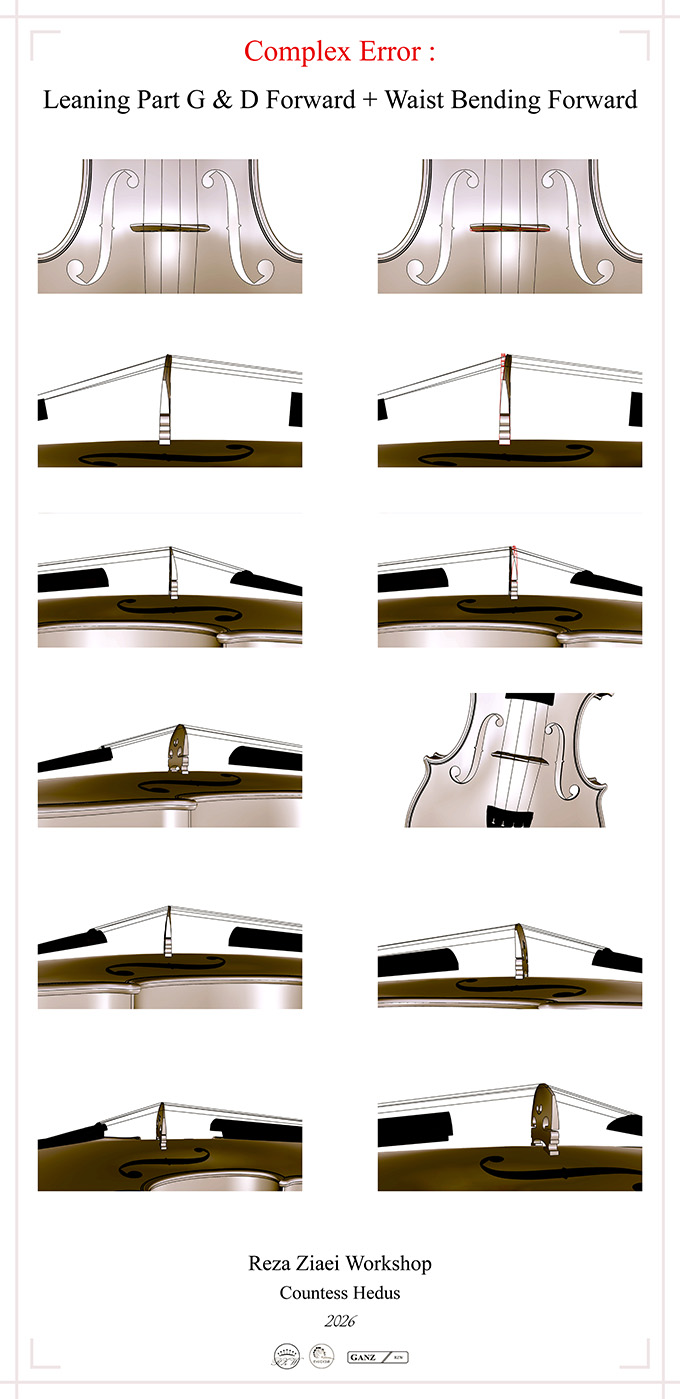
Leaning Part G & D Forward + Waist Bending Forward
The adjacent figure illustrates the localized displacement of the G and D string region on the upper
area of the violin
bridge, along with its Forward bending. This deformation occurs as a result of the tensile forces
exerted by the
respective strings.
Production 11
Violin Bridge Deformation Analysis Posters (Productions 2–10)
This research collection consists of three posters presenting a normal bridge configuration as a reference and examining eight deformation patterns through visual representation and analysis. Each poster presents three configurations, with each configuration illustrated through six images: two showing the bridge’s shape and deformation state, two based on Zebra analysis, and two based on Draft Angle analysis.
For each configuration, presenting the bridge’s shape alongside the results of the two visual analysis methods enables the observation and comparison of geometric characteristics and the differences between the normal configuration and the deformed configurations.

.png)
.jpg)